|
||||
|
||||
 Aleksandr Andreevich BARANOV 1st Gov, Ch Mgr Russian-American Co. |
 Grigorii Ivanovich SHELIHOV Pioneer of RAC, Co- Precursor Co. |
 Innokentii [Ioann VENIAMINOV] Bishop of RA Colony Metropolitan Moscow |
 Nikolai Petrovich REZANOV Full Chamberlain, Plenipotentiary RAC |
|
||||
|
||||
|
||||
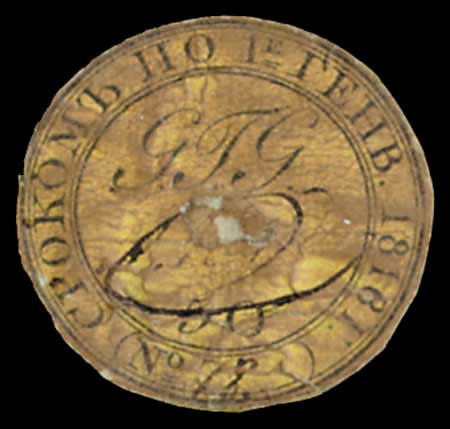
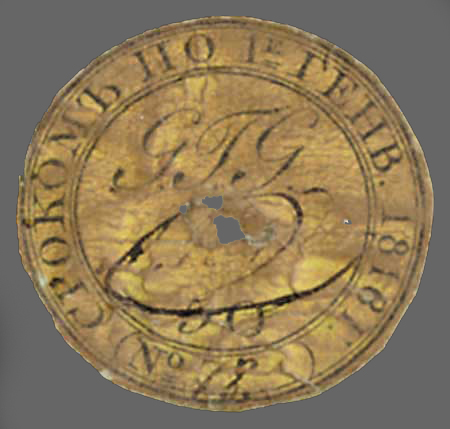 P.UNL 50 Kopek 1818 Ussuri Boards 6.6.2002 * No.73, Lot 1146 Lyn Knight Currency Auctions * Based on new information provided by RAC expert, Dmitriy "Dim" Litvak, this 50 Kopek leather note is now confirmed that it was issued by Aleksandr Andreevich BARANOV 1st Gov, Ch Mgr., Russian-American Co., as a temporary note to address the shortage of monetary funds at the time. (2) See further details below |
||||
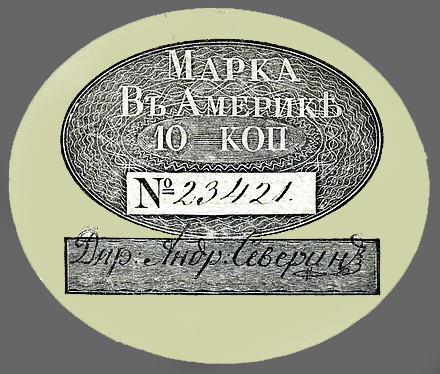
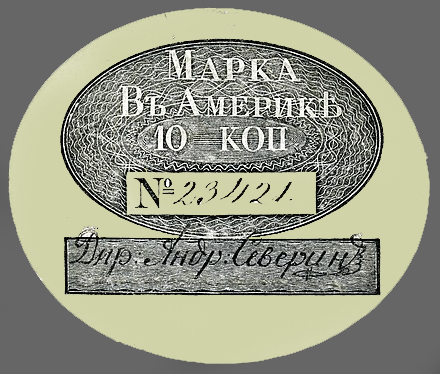 P.UNL, K.53.1 10 Kopeks ND No.23421 |
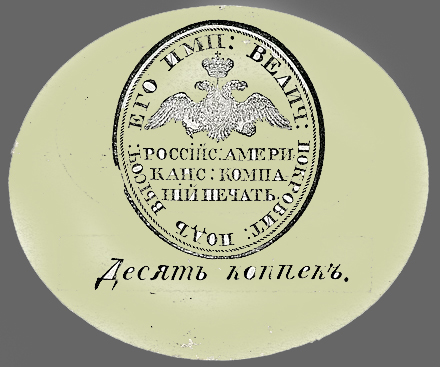 Back Unknown Collection |
|||
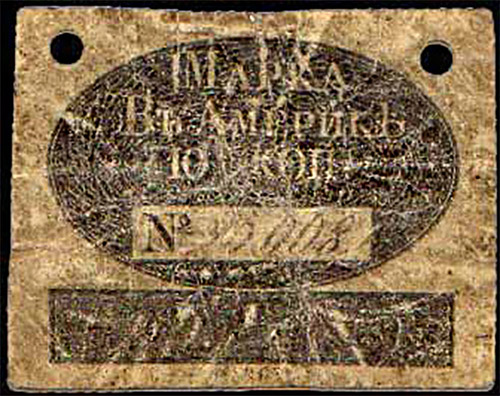
P.UNL, K.53.1* 10 Kopeks ND No. 25008 |
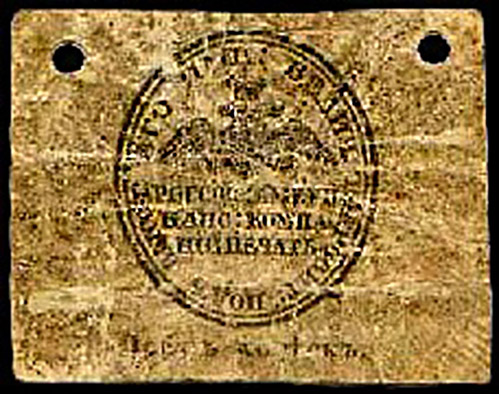
Back Ilkka Mäkitie Collection |
|||
 P.UNL, K.53.1 10 Kopeks ND No. 26806 |
 Back Unknown Collection |
|||
 P.UNL, K.53.1 10 Kopeks ND No. 26818 |
 Back Unknown Collection |
|||
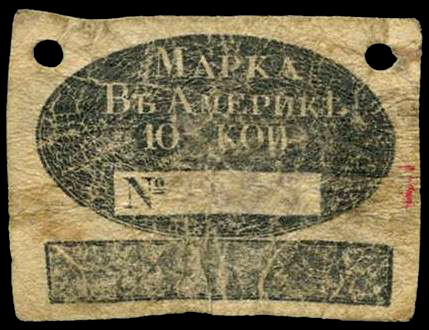 P.UNL, K.53.1 10 Kopeks ND No.? |
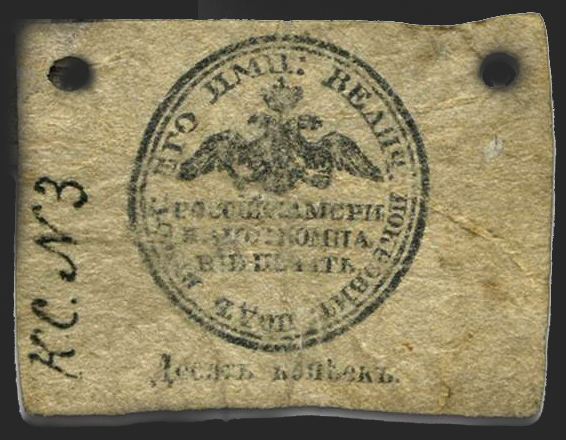 Back Unknown Collection Znak-auction.ru Emission 16, Lot 64 |
|||
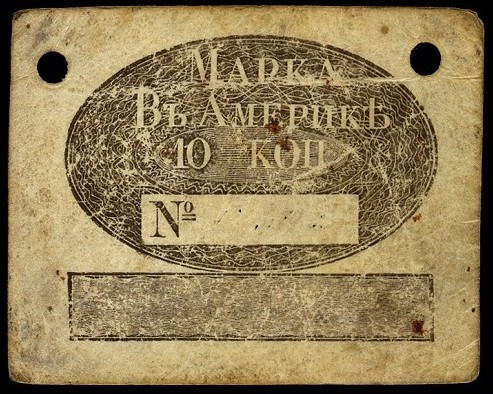 P.UNL, K.53.1 10 Kopeks ND No.? |
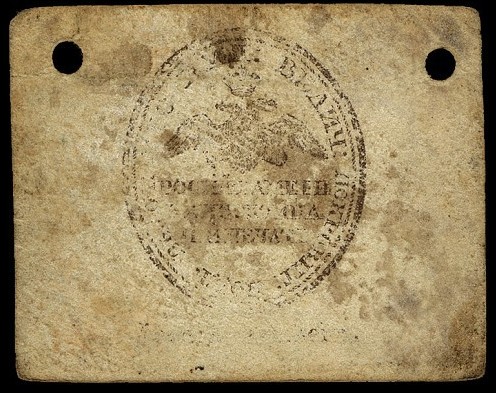 Back Unknown Collection, LKCA |
|||
 P.UNL, K.53.2 25 Kopeks ND No.14970 |
 Back ex.Agathon Fabergé See Hellman Auctions Ltd. Mar.3rd 2007 |
|||
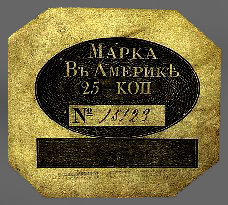
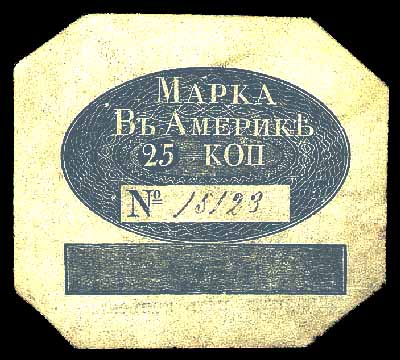
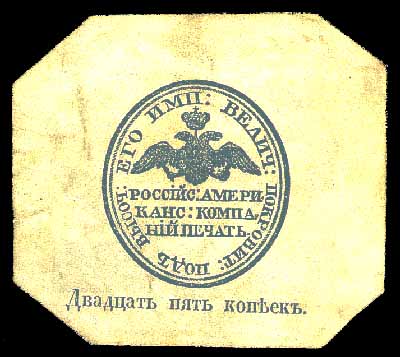
P.UNL, K.53.2* 25 Kopeks ND No.15123 |
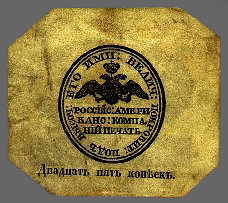
Back Sold for $7,187 Memphis,TN June 2003 Images Courtesy: R.M .Smythe & Co, |
|||
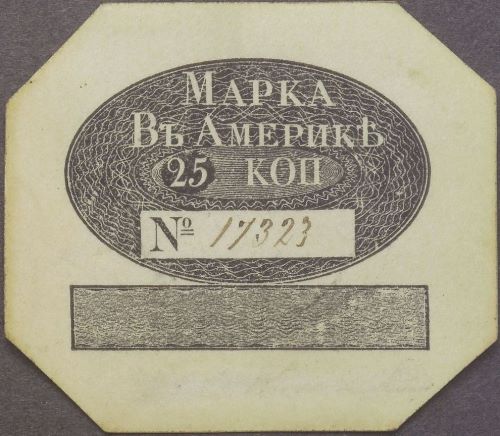 P.UNL, K.53.2 25 Kopeks ND No.17323 |
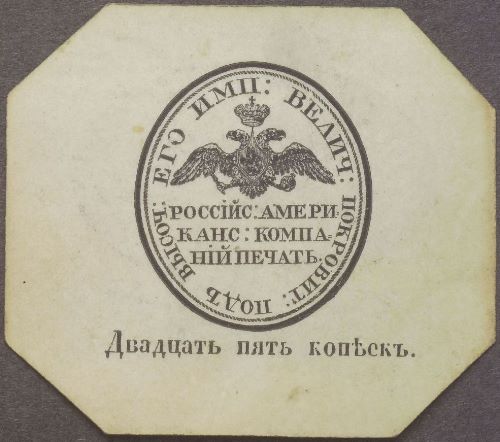 Back ex Boyd. |
|||
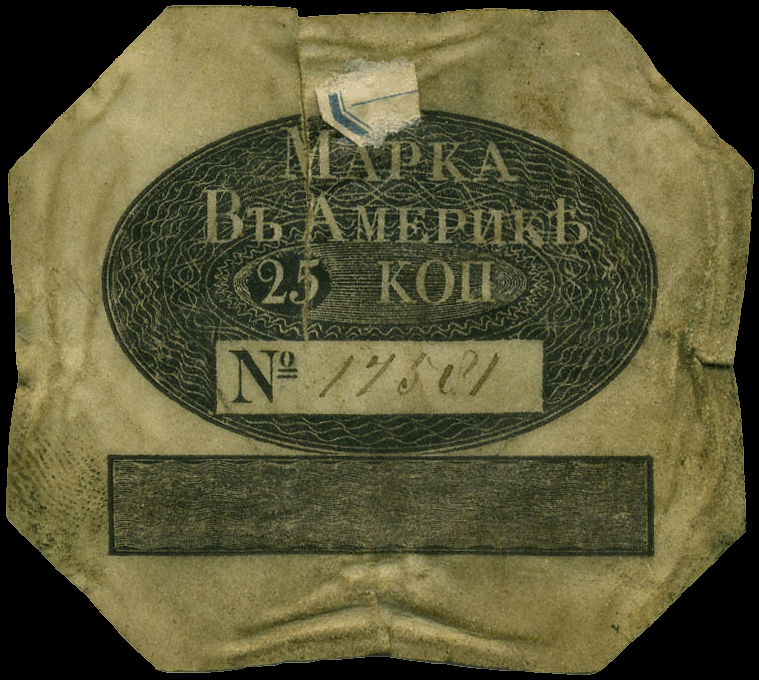 P.UNL, K.53.2 25 Kopeks ND No.17581 |
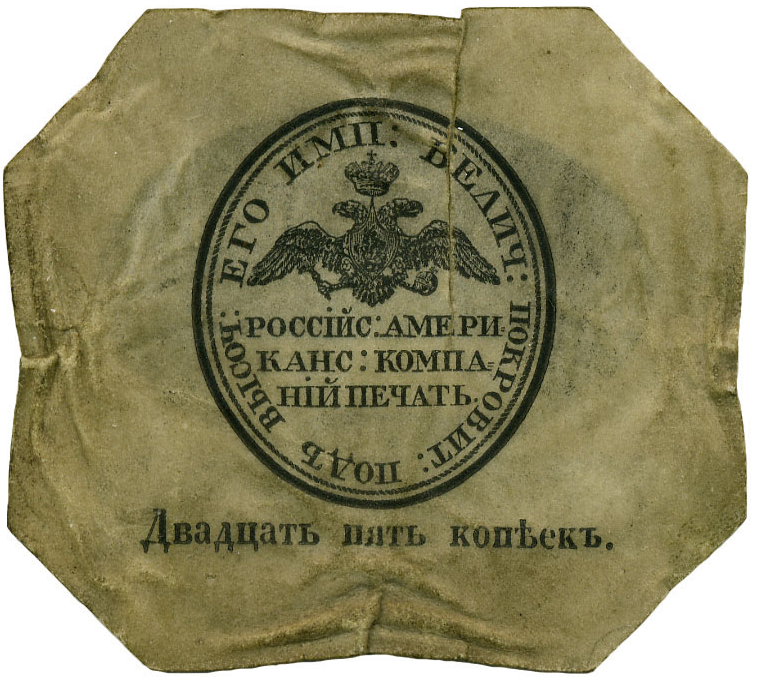 Back Private Collection |
|||
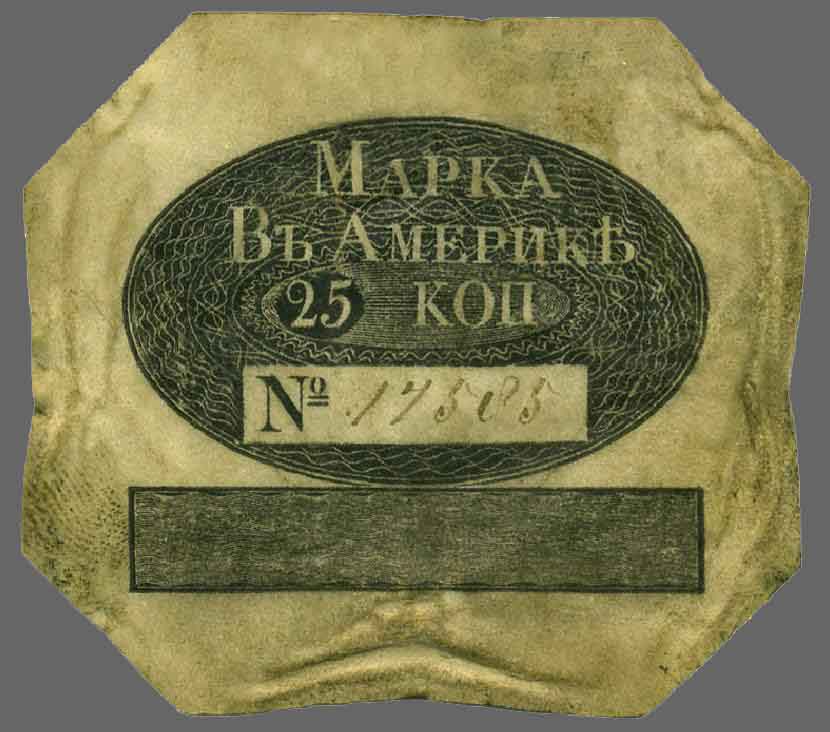 P.UNL, K.53.2 25 Kopeks ND Unauthorized Reproduction of Note above |
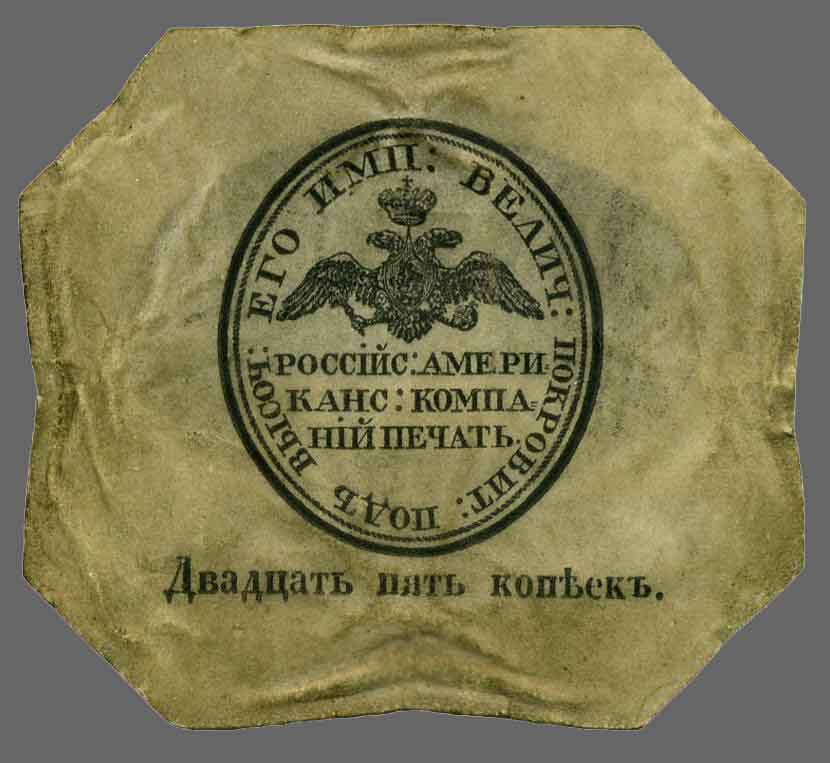 Back Unauthorized Reproduction of Note above |
|||
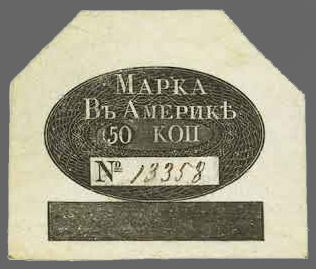 P.UNL, K.53.3 50 Kopeks ND No. 13358 |
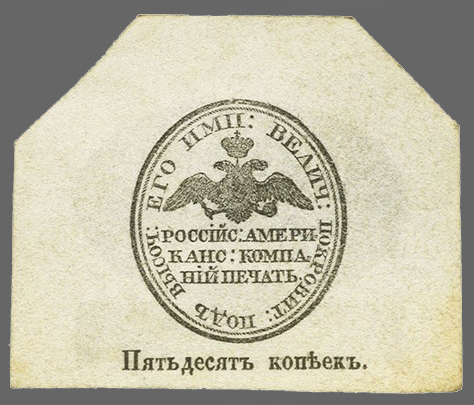 Back Henry H Clifford Collection |
|||
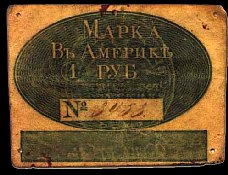
P.UNL, K.53.4* 1 Ruble ND No.3458 |
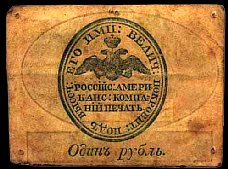
Back ex. Fred Howard Collection |
|||
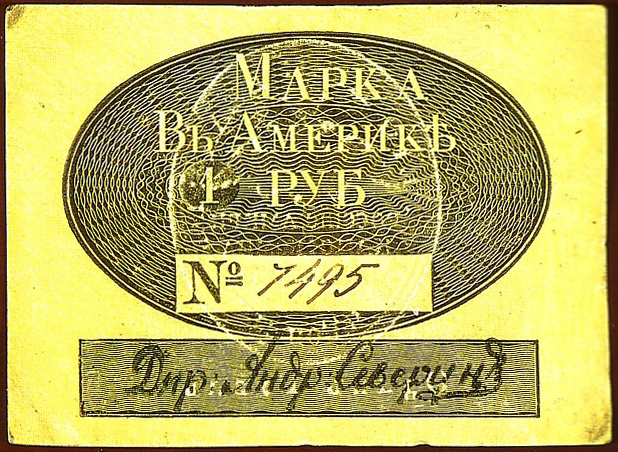 P.UNL K.53.4* 1 Ruble ND No. 7495 |
68x47mm Russian State Historical Museum |
|||
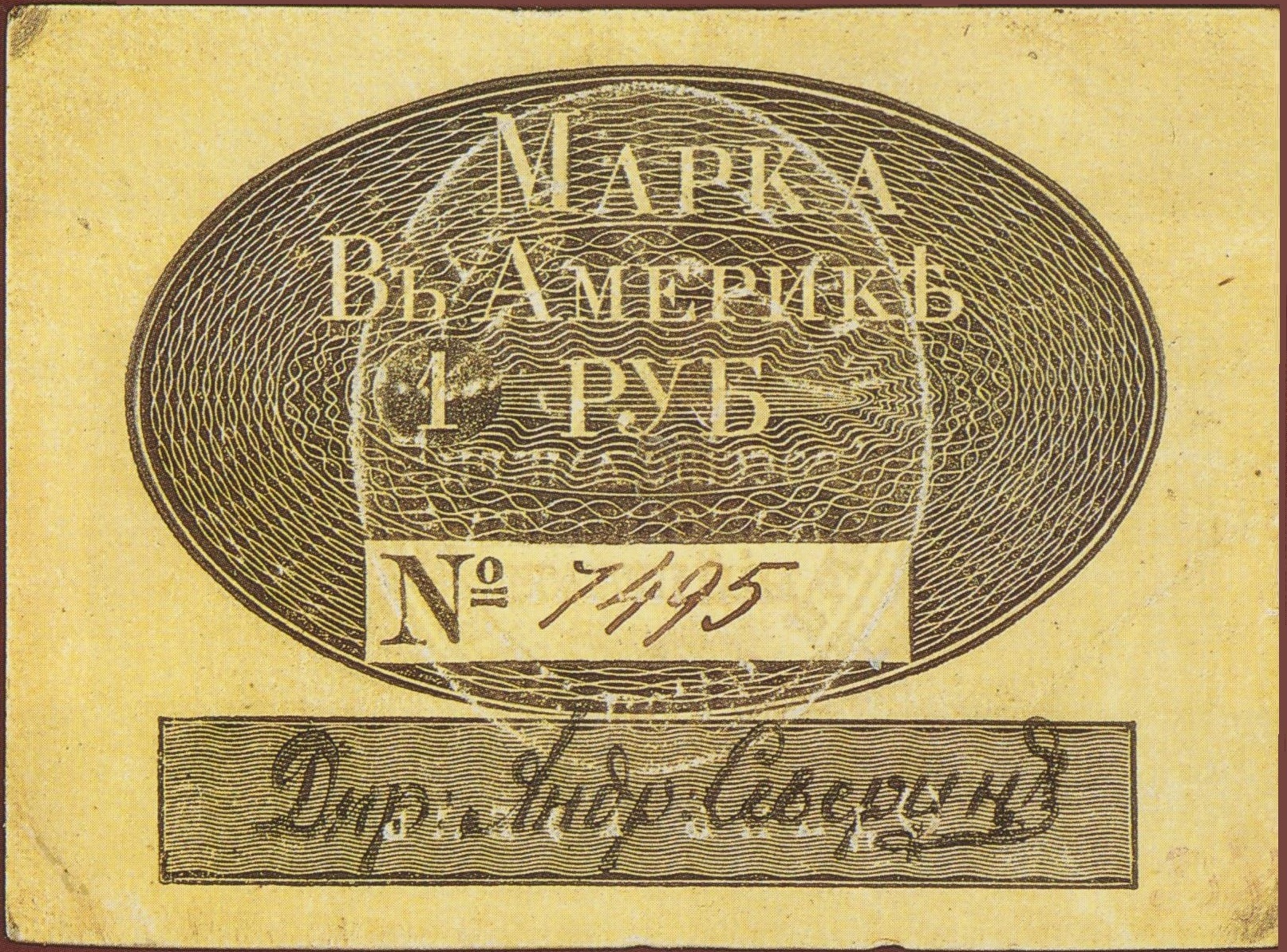 P.UNL, K.53.4 1 Ruble Marka No.7495 ** |
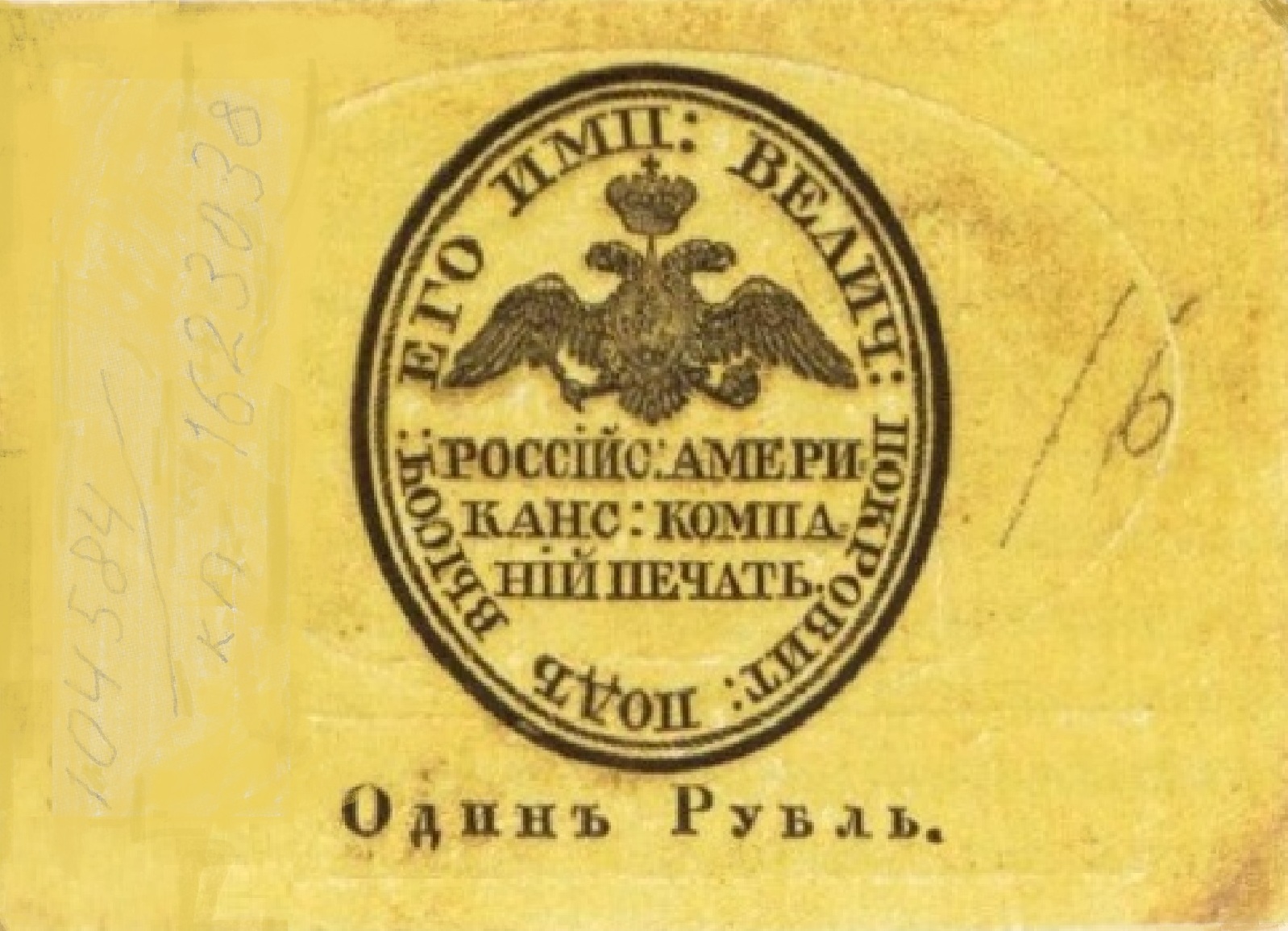 Back RESTORED ** |
|||
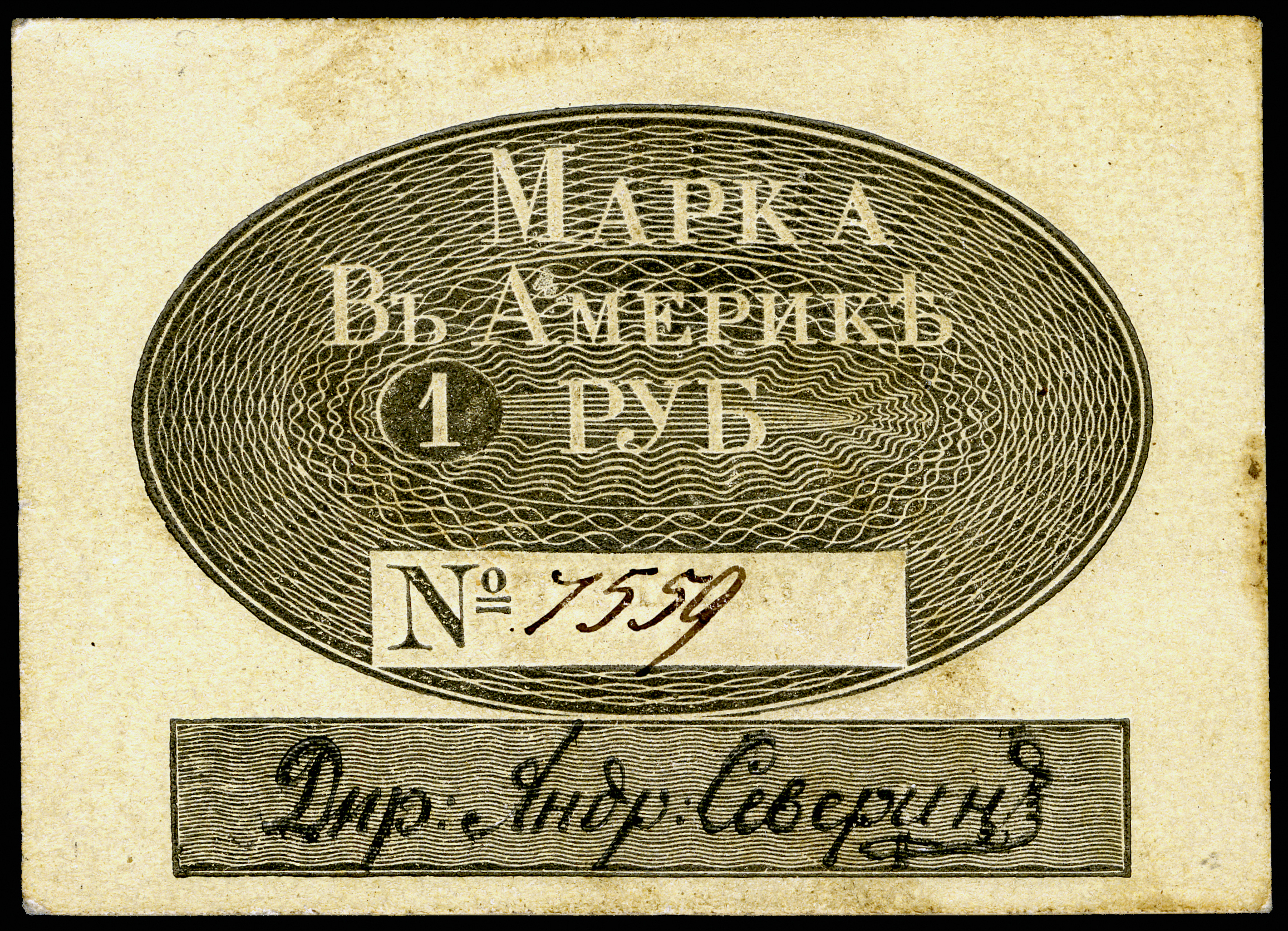 P.UNL, K.53.4 1 Ruble ND No. 7559 |
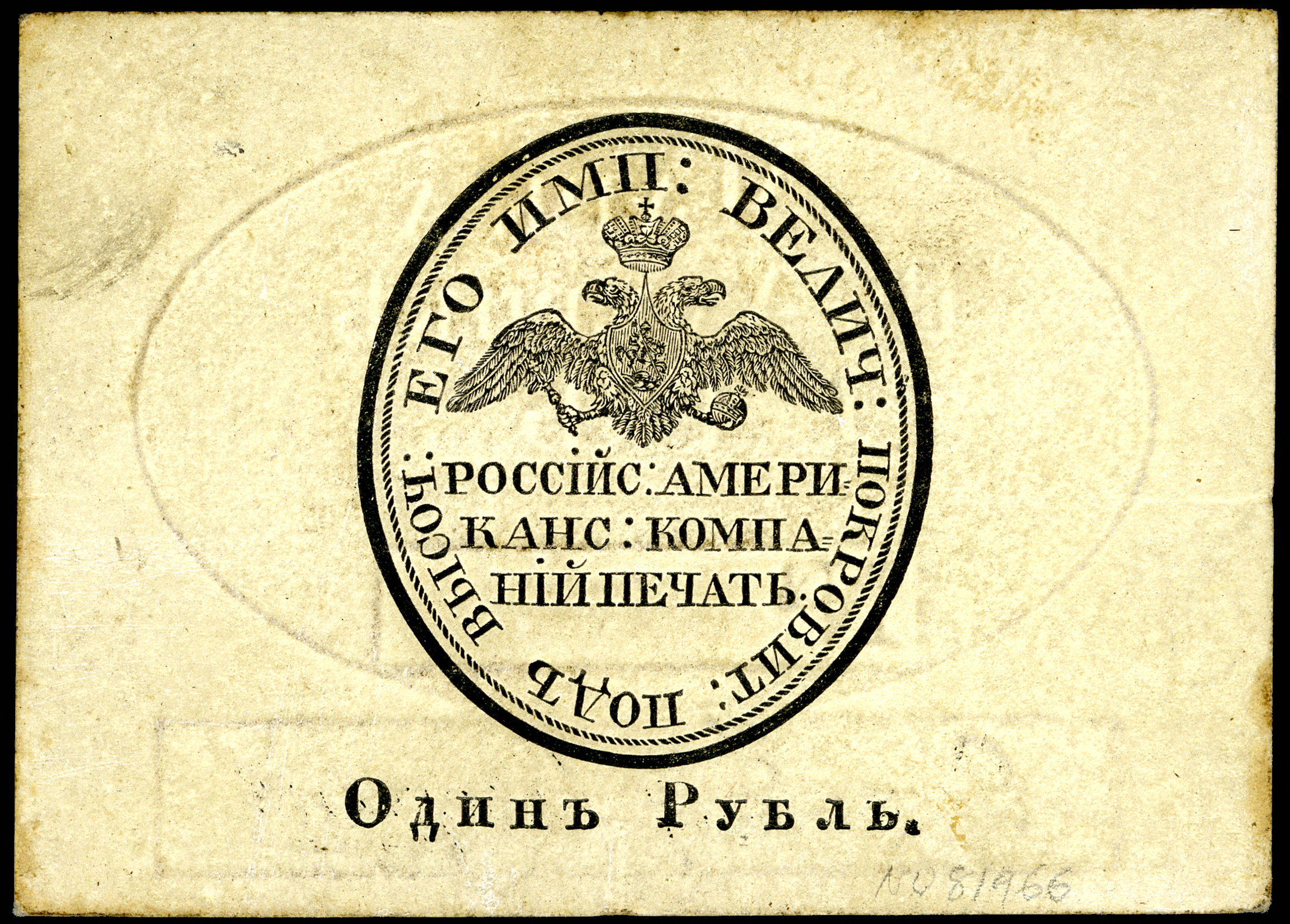 Back Unknown Collection |
|||
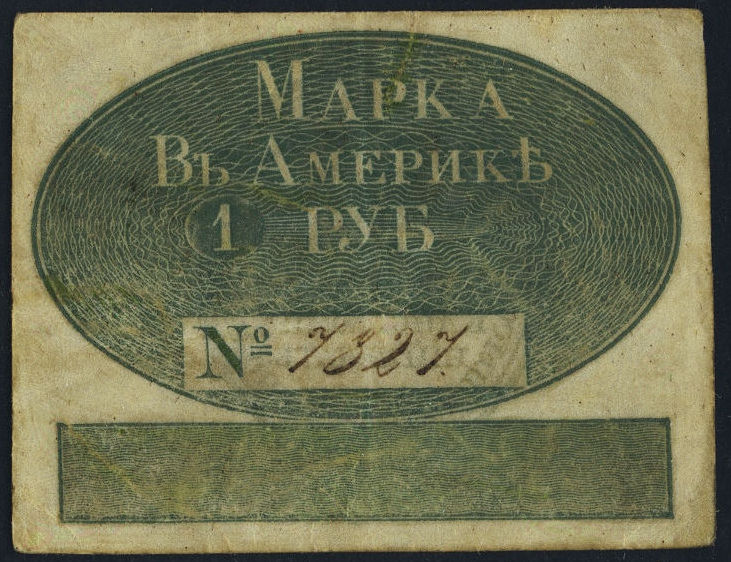 P.UNK, K.53.4 1 Ruble ND No.7827 |
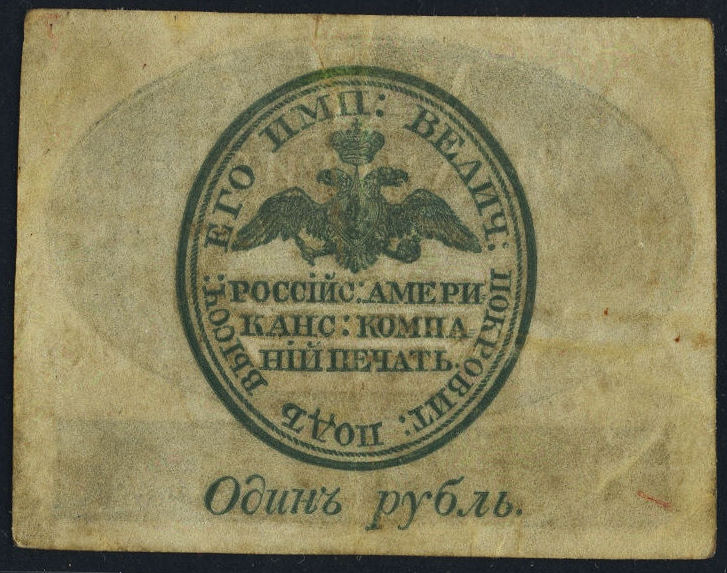 Back Lot 12205 Heritage auction, 6.2010 |
|||
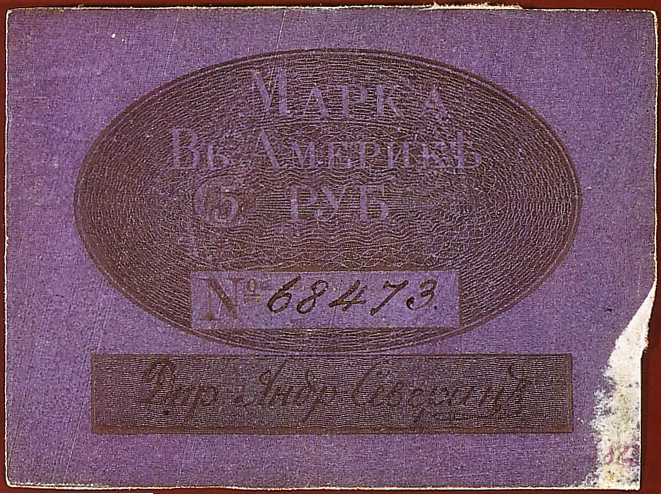 P.UNL, K53.5* 5 Rubles ND No.68473 |
71x52mm Russian State Historical Museum |
|||
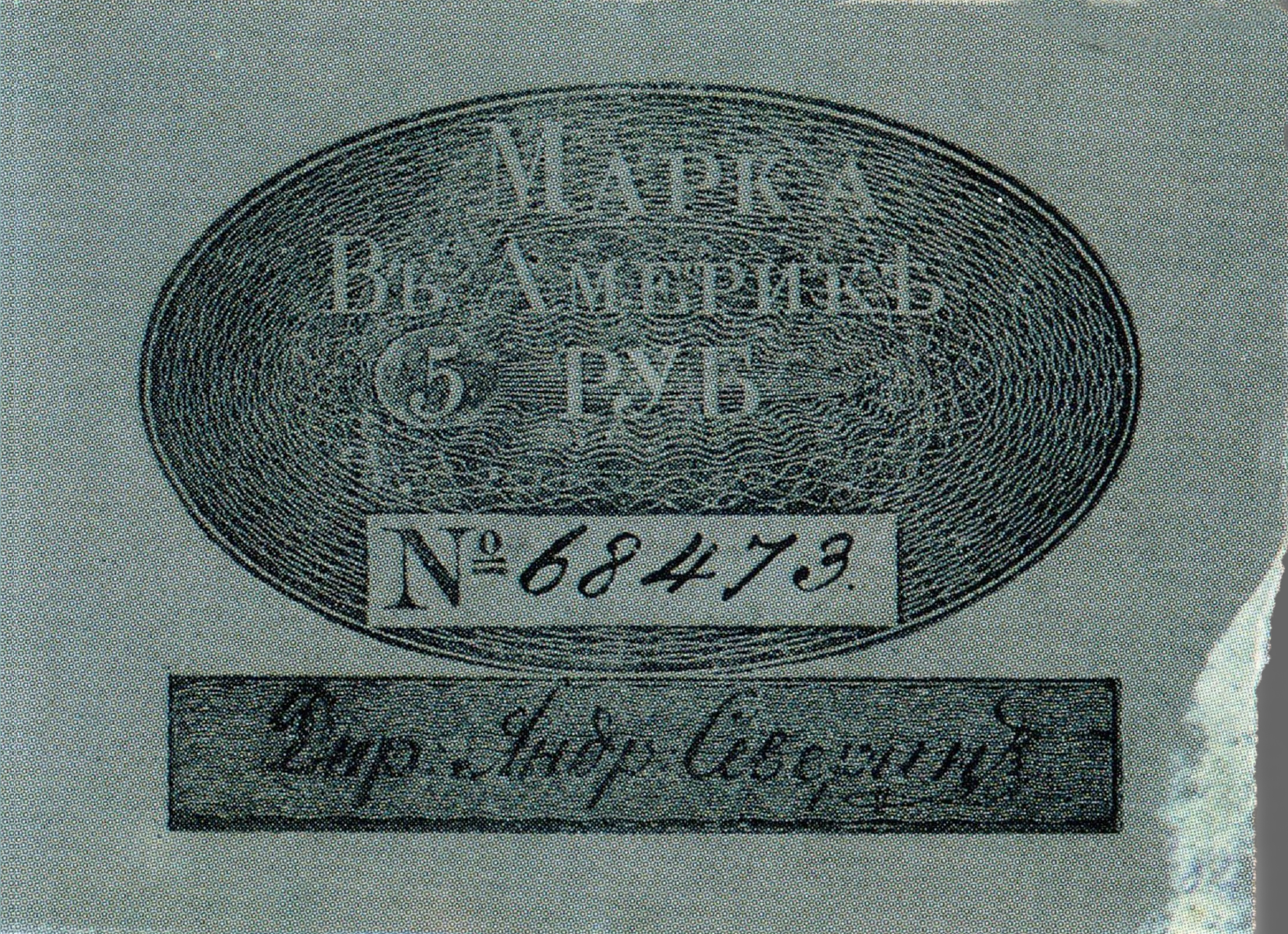 P.UNL K53.5 5 Rubles ND No.68473** |
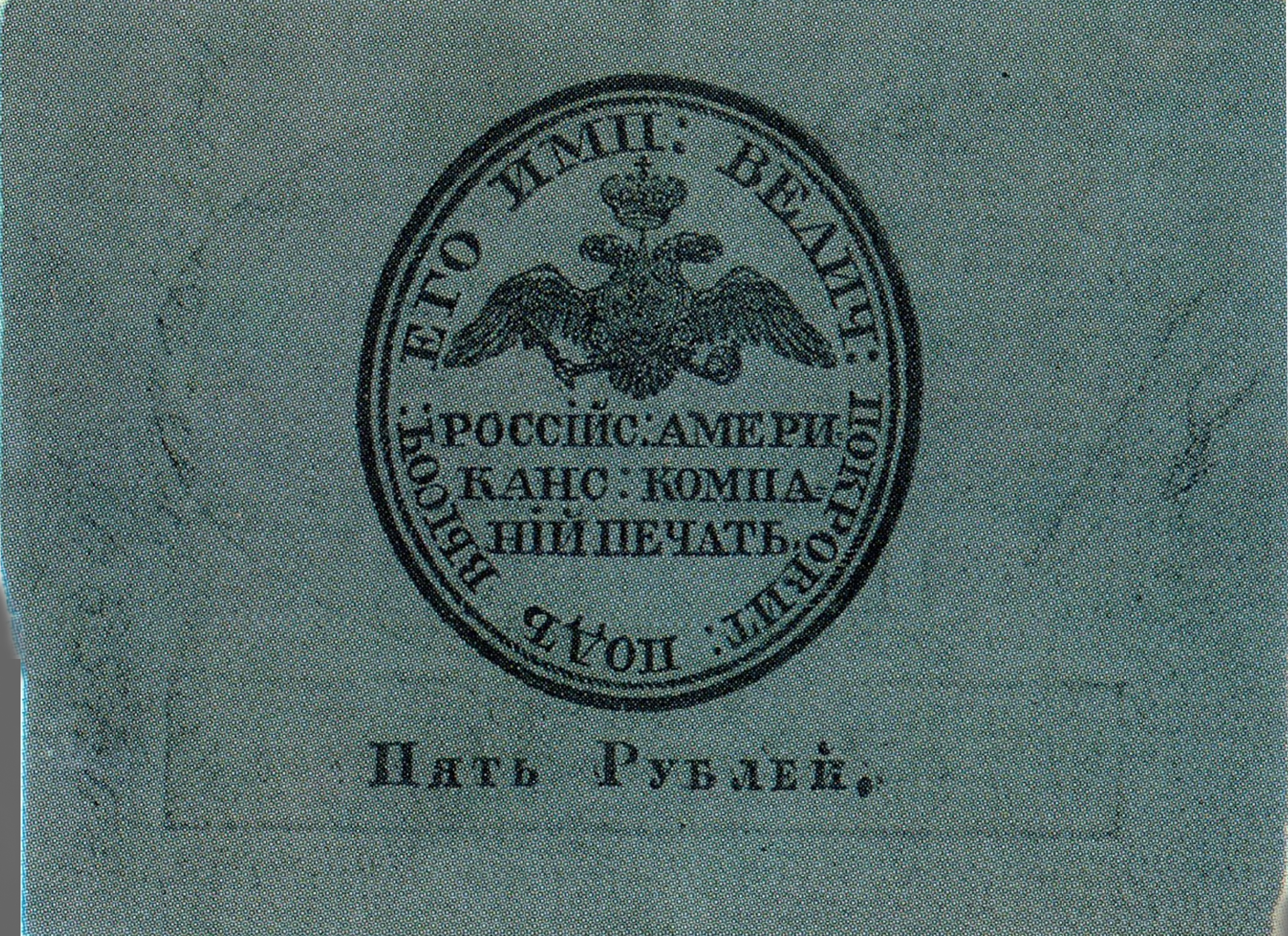 Back** |
|||
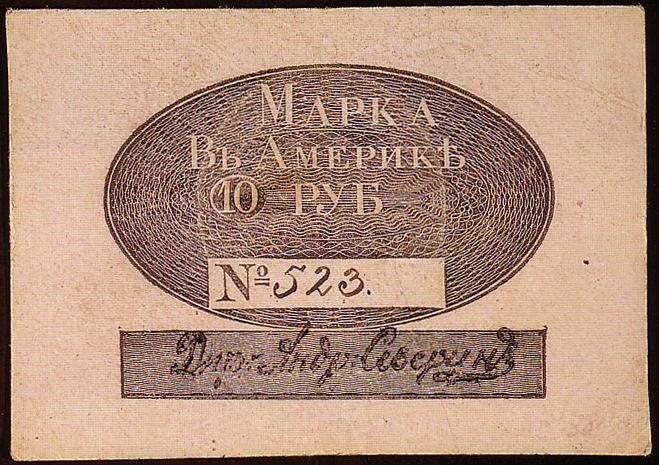 P.UNL, K53.6* 10 Rubles ND No.523 |
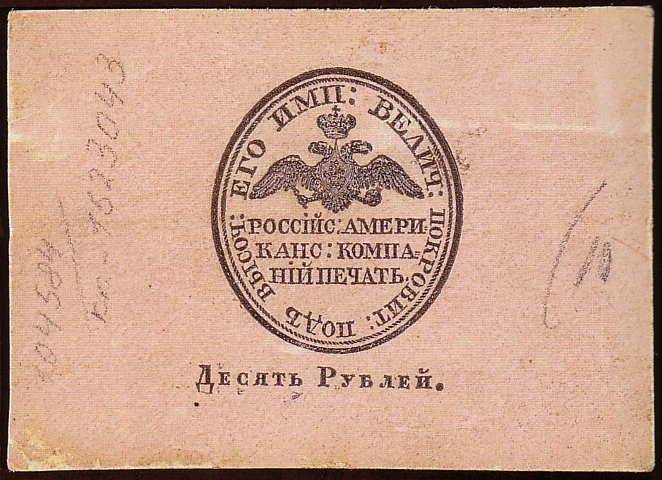 Back 80x57mm, Russian State Historical Museum |
|||
_med.jpg)
P.UNL, K.53.6* 10 Rubles ND No.2953? |
_med_r.jpg)
Back |
|||
_3435_med.jpg)
P.UNL, K.53.6* 10 Rubles ND No.5435? |
_3435_med_r.jpg)
Back |
|||
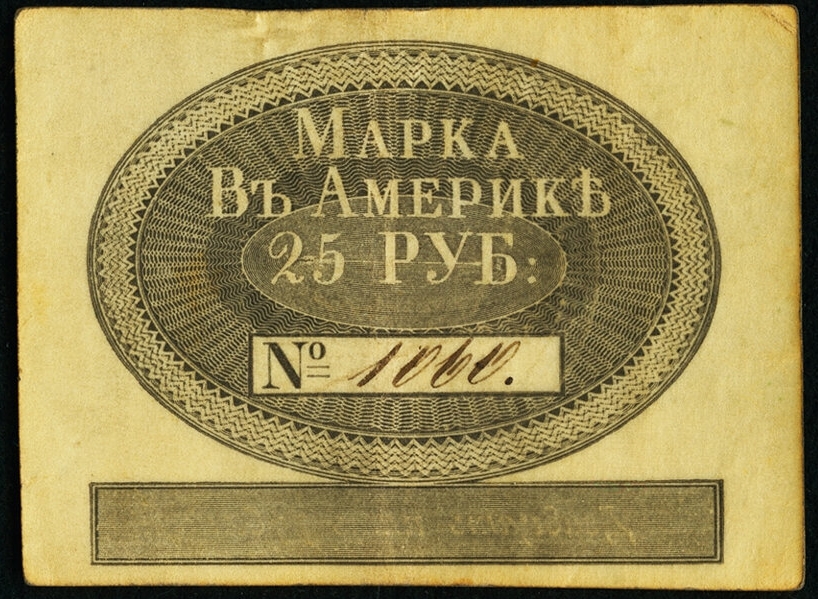 P.UNL, K53.7* 25 Roubles ND No.1060 Completely Unique; Brussels/Pflumer Coll. |
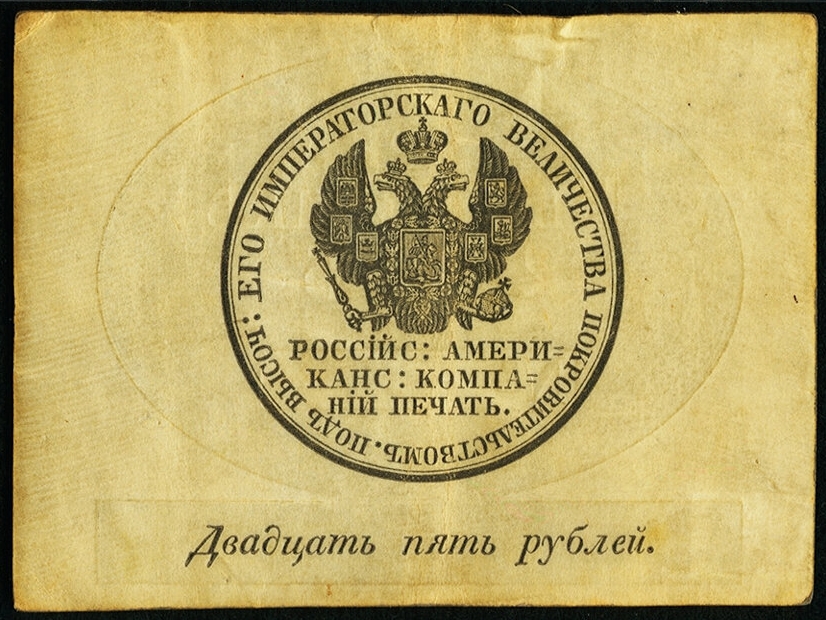 Back ex. Ted Uhl Collection Sold $192,000 2021 FUN HA Auction |
|||
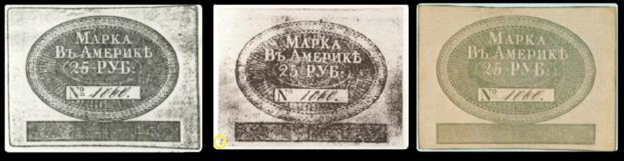 P.UNL, K53.7 25 Ruble Copies (1) |
||||
|
||||
|
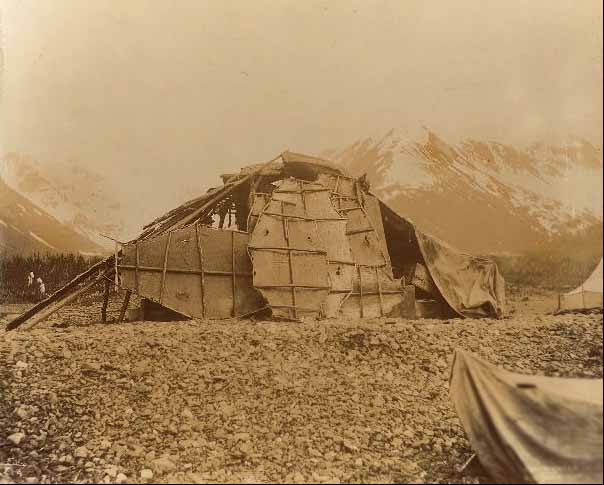
RAC was given a monopoly to handle all of Russia's trade in its American colony. It used natives instead
of Russians
for hunting and
The history behind the appearance of “worn
copy of the 25-ruble note with serial number 1060” is
fascinating and illustrates how
In this case, in Russian speaking community,
the image of the token first appeared in Shikanova's
article in 1986 and later gained
Zander accompanied his text with a photograph,
wondered: why make a ‘crude copy’ if there is an
original? Later, in 1986
The mystery of why a copy of seemingly poor
quality was created when an original existed was
solved by the discovery that the
The fact that a Canadian collector sent
Ivochkina a black-and-white copy in the 1980s, during a time
when color copies were
On the image above (from left to right): black
and white image from Bowers-Ruddy booklet 1982;
black and white image published
|
|||
|
(2) Initially, with only this information, I also tried to identify it. However, I immediately had doubts about its presumed location—the "Ussuriysk region." The fact is that Ussuriysk is located near Vladivostok, on the border with China and North Korea. This territory was not part of the colonial possessions of the Russian Empire and was located on the mainland part of the then Russian Empire, now the Russian Federation. Therefore, the monetary note could not be attributed to the issues of the Russian-American Company (RAC). Now, with the receipt of new information about this 50 Kopeck leather note, I have changed my opinion. A. Denisov (the author of the original token, from which a counterfeit was made using Photoshop and placed on NUMISMONDO) published a catalog back in 2005, in which he described the marks of the RAC. It included information specifically about this note—the 50 Kopecks, which I missed. With a very high degree of probability, it can now be asserted that this is a temporary note (along with Enoch Furuhjelm's marki), issued by the administration of the RAC, i.e., Baranov, to address the shortage of monetary funds.
Dmitriy "Dim" Litvak |
|||
|
|||
 |
The untold
story of the RAC:
The Hudson Bay Company 2.0 by Dmitriy Litvak Backgrounder Now Available on Amazon |
||
 |
 |
"Uncle
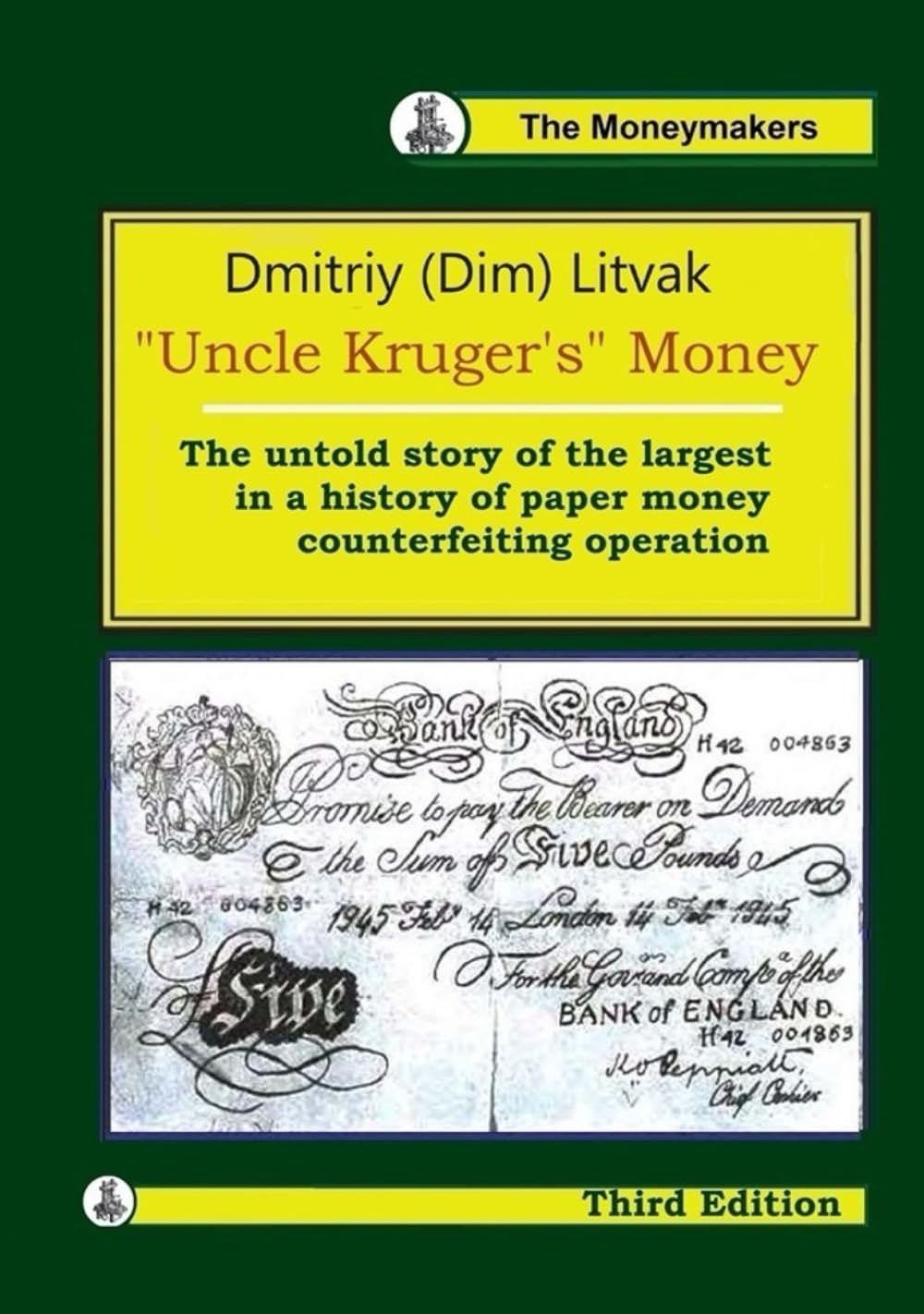
Kruger's" Money: the untold story of the largest in history of paper money counterfeiting operation (Moneymakers. The Untold Stories) Backgrounder by Dmitriy Litvak Available AMAZON |
|
-6_med.jpg) |
The untold
story of the Russian Giant The Moneymakers, Part I, 1818-1919 by Dmitriy Litvak Jan. 2023 COMING SOON |
||
|
Our sincere thanks to Dr. Ilkka Mäkitie for background information and images. |
|
* Kardakoff, N., "Katalog der Geldscheine von Russland und der Baltischen Staaten 1769-1950." Berlin, 1953 |